A History of Lunar Science
1000–1814
The Moon Has Shaped Human Civilization in Ways Both Subtle and Profound
The Moon has been Earth's companion since the birth of the Solar System, 4.6 billion years ago. Ancient humans were captivated by the Moon's cycles as it changed position, shape and vanished from the sky for part of its 29-day cycle. Stone age peoples recorded the phases of the Moon in various ways, as the observation of the Moon gave them a way to count the passage of days and predict the arrival of the seasons. Activities key to the development of human civilization like agriculture and hunting absolutely depended on reliable timekeeping, so all human societies developed ways to determine the length of the year.

We see evidence of this in places like Stonehenge, where the position of some of the stones seem to be related to lunar cycle. These calendar systems also dictated when the year should begin and how to divide the year into smaller units of time. In fact, although the modern Gregorian calendar is based on the solar year, the earliest calendars were all based on the lunar cycle.
The Telescope Revolutionized Our View of the Moon
By the early 1600's, the invention of the telescope enabled the first crude maps of the Moon by Thomas Harriot and Galileo Galilei. These early maps hinted that the Moon's surface was complex, filled with mysterious light-colored highlands, dark lowlands, and odd circular features.
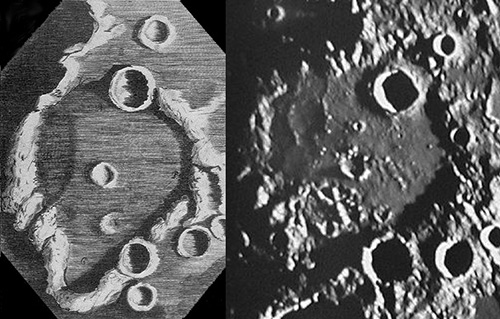
In 1664, English scientist Robert Hooke was the first to investigate the nature and origin of the circular features on the Moon. He made detailed observations and conducted experiments to explain their formation as the result of impacts or volcanic processes. Giovanni Basttista Riccioli, a Jesuit priest and academic, in 1651 published a naming for features on the Moon that is still largely in use today. Riccioli called the dark lowland areas "seas" or "mare" in Latin and named them after the mythological qualities that the Moon was thought to possess (for example, tranquility and fertility). He also named craters after well-known philosophers, religious figures, and scientists.
How Did Rockets Develop?
The science of rocketry has a long history, starting with the invention of fireworks in China near the beginning of the first millennium. Early fireworks were bamboo tubes filled with a primitive gunpowder (consisting of saltpeter, sulphur, and charcoal), and were tossed into ceremonial fires during religious festivals to frighten evil spirits. Rockets were likely first discovered when bamboo fireworks, rather than exploding upon ignition, flew through the air propelled by the burning gunpowder gases.
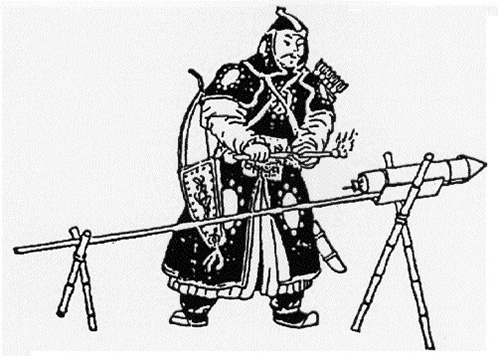
This discovery lead to the invention of the first working rockets, which were used in battle by the Chinese as early as 1000 A. C. E. The use of rockets in warfare became widespread by the seventeenth and eighteenth centuries. At the Battle of Baltimore in 1814, the rockets fired on Fort McHenry by the British rocket vessel HMS Erebus were the source of the "rockets' red glare" described by Francis Scott Key in The Star-Spangled Banner.
1926–1967
Rockets Propelled Humans into Space and Made the Exploration of the Moon a Reality
After World War II, researchers in the United States began to employ rocket-powered aircraft to investigate high-speed flight. On October 14, 1947, U. S. Air Force test pilot Charles E. "Chuck" Yeager became the first human to fly faster than the speed of sound aboard the X-1 rocket plane.
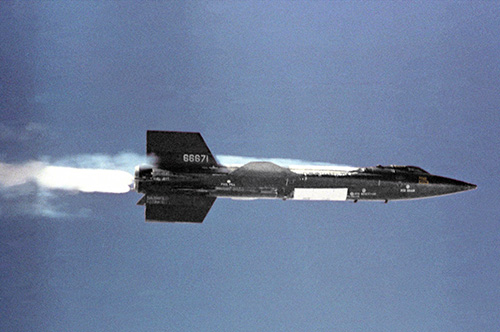
American experiments using new and faster rocket planes continued throughout the 1950s, culminating in the X-15 rocket plane, which flew a series of suborbital flights beginning in the late 1950s. The X-15 was the fastest piloted rocket-powered research aircraft that has ever been flown, eventually reaching Mach 6.72 in 1967. Two flights of the X-15 achieved altitudes of 100 km (60 miles), the officially recognized limit of space, and 10 others achieved heights of at least 50 miles. The pilots on all of these flights earned astronaut wings. The lessons learned in the X-15 program led directly to the American Space Shuttle.
The Three Visionaries of Space Flight
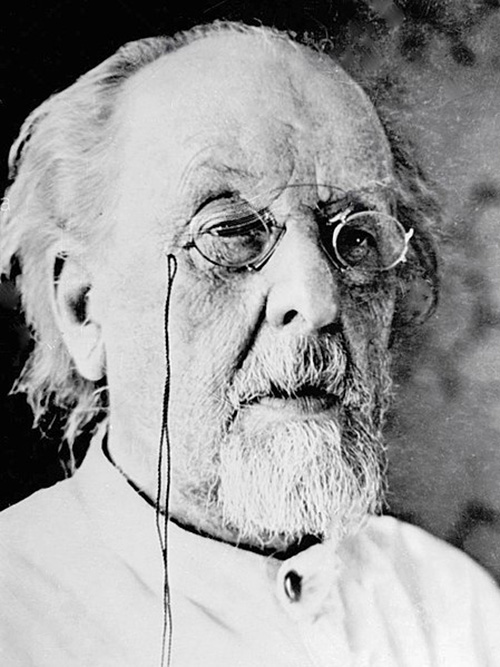
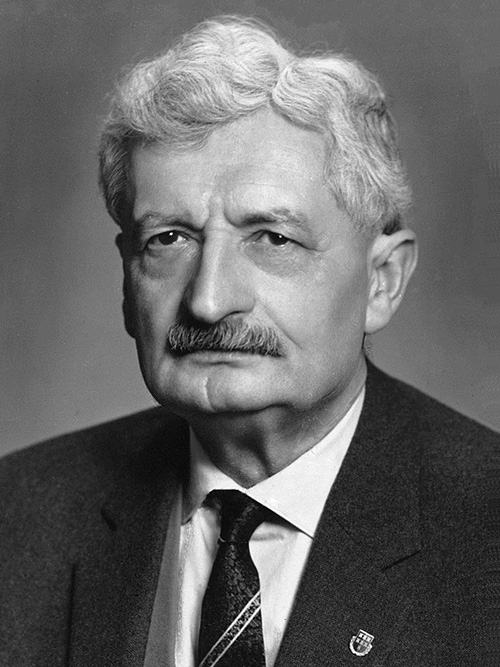
The work of three pioneering scientists, all working independently, directly led to the Space Age. At the end of the nineteenth century, Russian schoolteacher Konstantin Tsiolkovsky first conceived of the rocket as a realistic means of human transportation into space and developed such concepts as liquid fuel propulsion, rocket staging, and crewed space stations, all of which eventually became a reality.
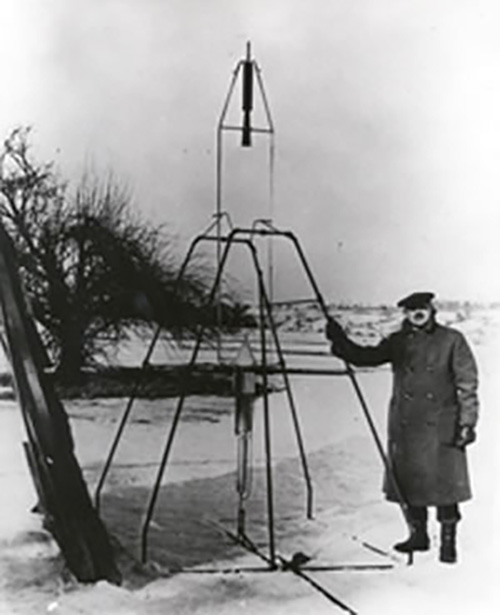
American Dr. Robert Goddard designed and successfully flew humanity's first liquid-fueled rocket in 1926 and continued to build increasingly sophisticated rockets through the 1930s.
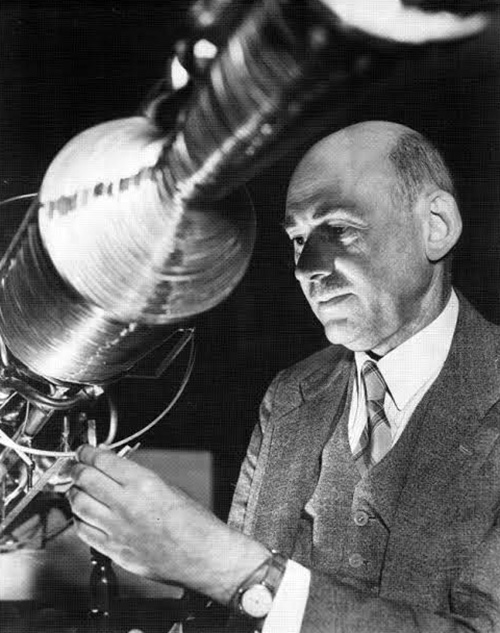
At the same time, German scientists led by Dr. Hermann Oberth founded the German Society for Space Travel in 1926, which began to experiment with similar designs. These German experiments led to the development of the V-2 rocket during World War II.
What Are Rockets?
A rocket is a vehicle or device that obtains thrust by forcing or pushing extremely hot gasses at high speed out of a specially-shaped nozzle. In turn, the gasses push back on the rocket in the opposite direction, propelling the rocket forward. Unlike a jet engine, a rocket must carry both fuel and an oxidizer, such as oxygen, that allows the fuel to burn.
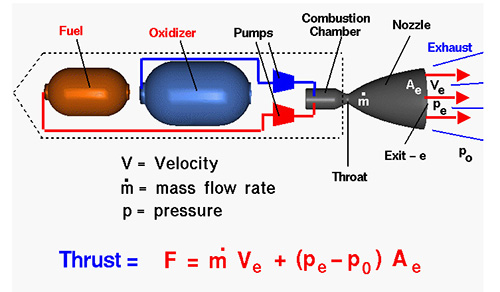
Because rockets carry their own oxidizer, they can operate outside of Earth's atmosphere in the vacuum of space, making space voyages possible. In fact, rockets operate more efficiently in space than they do in the Earth's atmosphere! Rockets that carry spacecraft are called launch vehicles, and need to reach a speed of 17,500 MPH to achieve orbit around the Earth and 25,000 MPH to escape Earths orbit for lunar voyages.
A Weapon of War Left an Enduring Legacy of Peace for All Mankind
The V-2 was the world's first mass produced liquid-fueled rocket. Developed by the Germans during World War II, V-2 rockets were designed to deliver bombs to allied cities in Europe and Great Britain. Over 1000 rockets fell on Allied Europe between 1944-1945, killing over 8000 people. Out of this destructive past, the V-2 became the catalyst of rocket research and development into the space age. Postwar testing of captured V-2's trained both American and Soviet engineers in the construction and operation of large rockets. All of today's rockets can trace their lineage to the V-2.
1957–1968
The Start of the Race to the Moon
With the end of World War II, both the Allies and the Soviet Union accquired rocket technology from the German V-2 program. Political and military tensions between the U.S. and Soviet Union (the Cold War) triggered the Space Race — the struggle to prove scientific superiority and military strength in space.
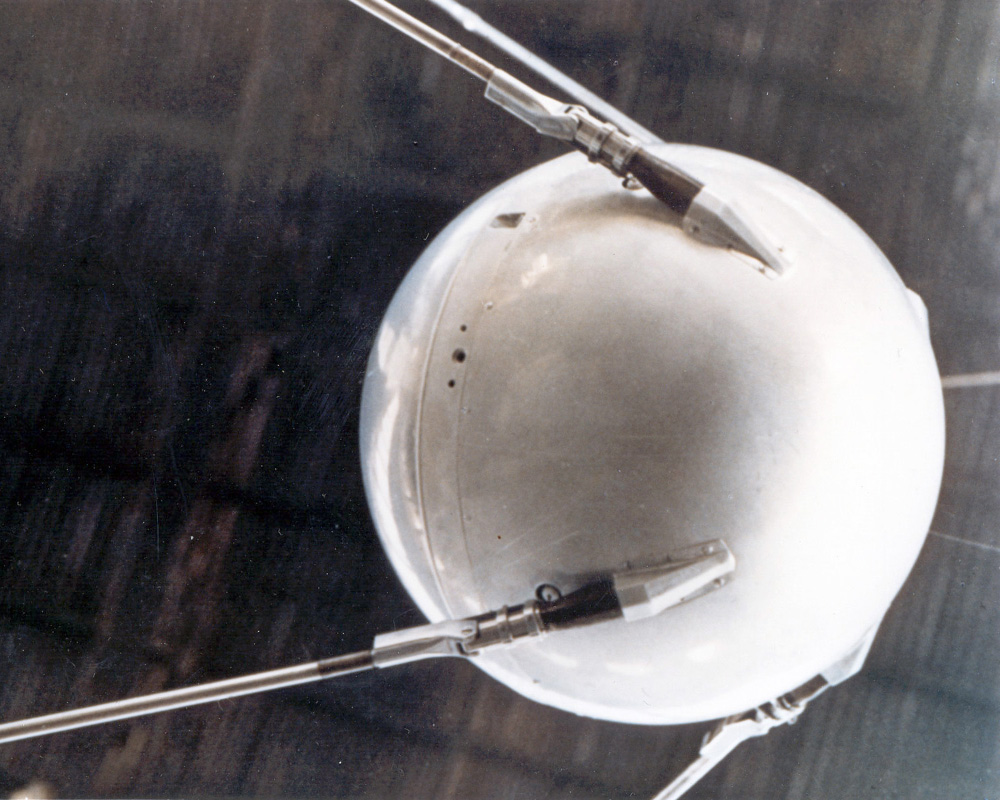
The Space Race began with the launch of Soviet Sputnik 1, the first artificial satellite to orbit the Earth, in 1957. This success was followed by Sputnik 2, which successfully carried the first animal into space. Reaching the Moon was the next milestone in the space race, also achieved by the Soviets (1959) through a series of highly successful robotic missions called Luna (Lunik, or Moon, in Russian).
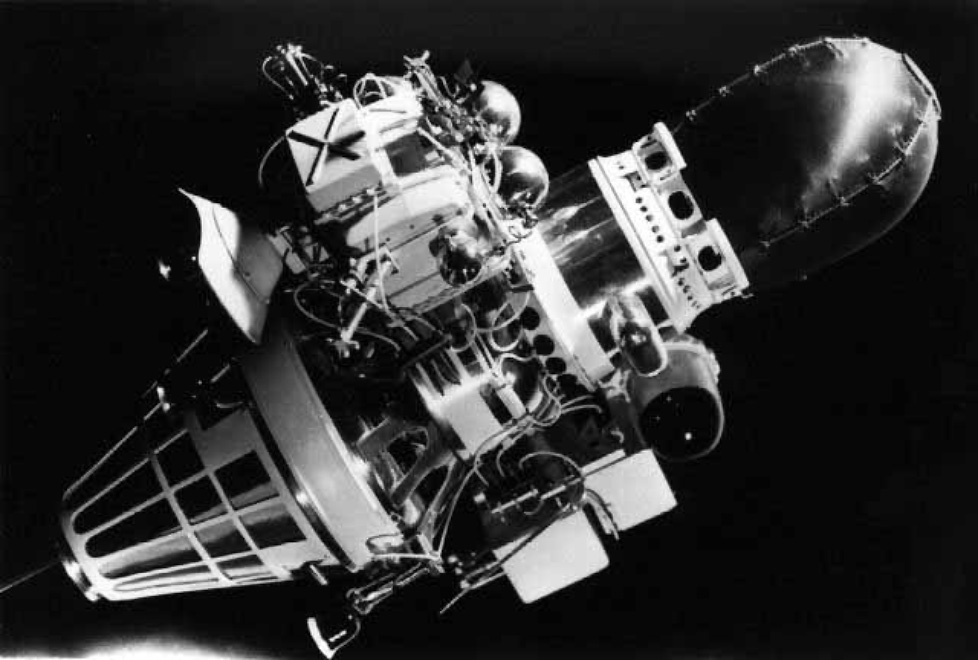
Ingenuity and Determination Propelled the Soviets Ahead in the Early Phase of the Space Race
Soviet and American space exploration accomplishments included:
- First satellite to orbit Earth, Sputnik 1
- First animal to enter Earth orbit, the dog Laika, Sputnik 2
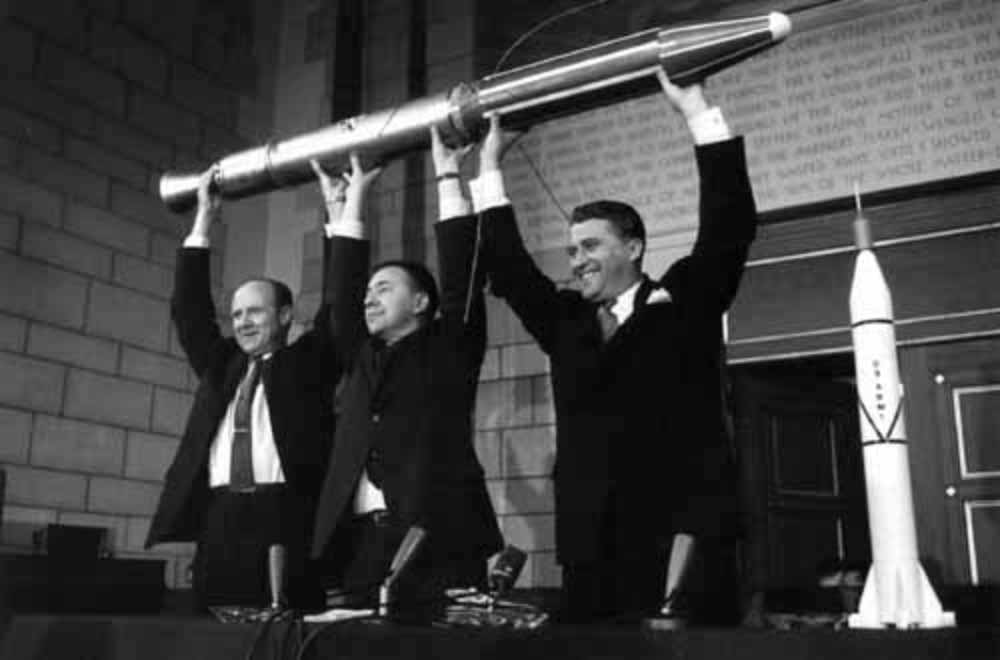
- Launch of the first U.S. orbital satellite, the Explorer 1 spacecraft
- First man-made object to pass near the Moon, Luna 1
- First images of the Moon's far side, Luna 3
- First person in space and in Earth orbit, Yuri Gagarin, Vostok 1
- Astronaut John Glenn becomes the first American in orbit
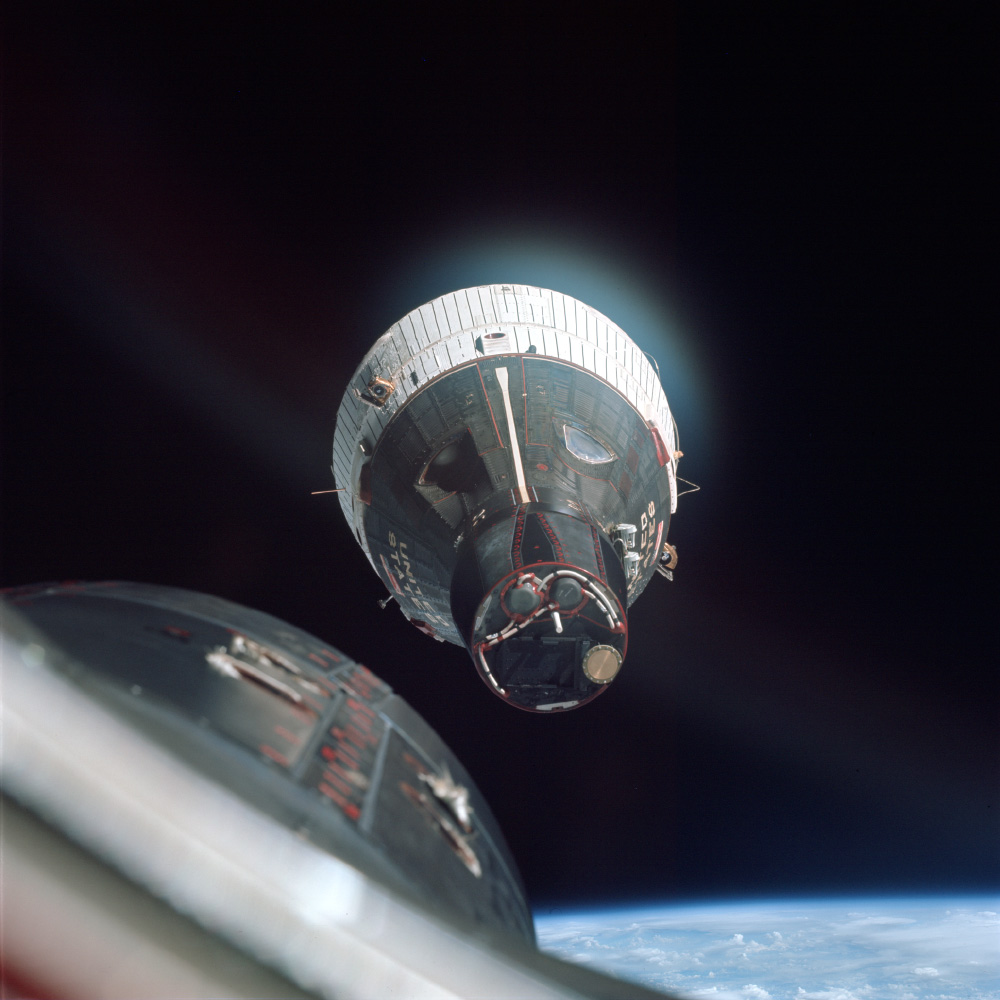
- Gemini 7-Astronauts Frank Borman and Jim Lovell spend two weeks in Earth orbit, which is the longest spaceflight until 1971, and perform the first successful orbital rendezvous between crewed spacecraft with Gemini 6
- Voskhod 2-Cosmonaut Alexei Leonov performs the first extravehicular activity
- First probe to make a soft landing on the Moon, Luna 9
- First probe in lunar orbit, Luna 10
- Gemini 8-Astronauts Neil Armstrong and Dave Scott perform the first successful crewed orbital rendezvous and docking
- Apollo 8-Astronauts Frank Borman, Jim Lovell, and Bill Anders become the first humans to orbit the Moon
- Apollo 11-Astronauts Neil Armstrong and Buzz Aldrin perform the first human lunar landing
- First robotic sample return from the Moon, Luna 16 (Soviet Union)
- First robotic space rover on the Moon, Lunokhod 1 (Soviet Union)
Following Sputnik, the U.S. launched its first successful satellite, Explorer 1, in January 1958. Instruments on Explorer 1 first detected the intense radiation bands that surround the Earth, now called the Van Allen radiation belts.
Landmark U.S. Robotic Missions
By 1958, NASA, the newly created National Aeronautics and Space Administration, led U.S. efforts to explore space and prepare for future human missions to the Moon. Three important robotic programs were conducted from 1959-1969 to prepare for the first human landing:
- Ranger, to collect the first close-up images of the surface of the Moon; practica
- Lunar Orbiter, to map the lunar surface before the Apollo landings; and,
- Surveyor, to perform soft landings on the Moon.
Ranger Missions (1961-1965)
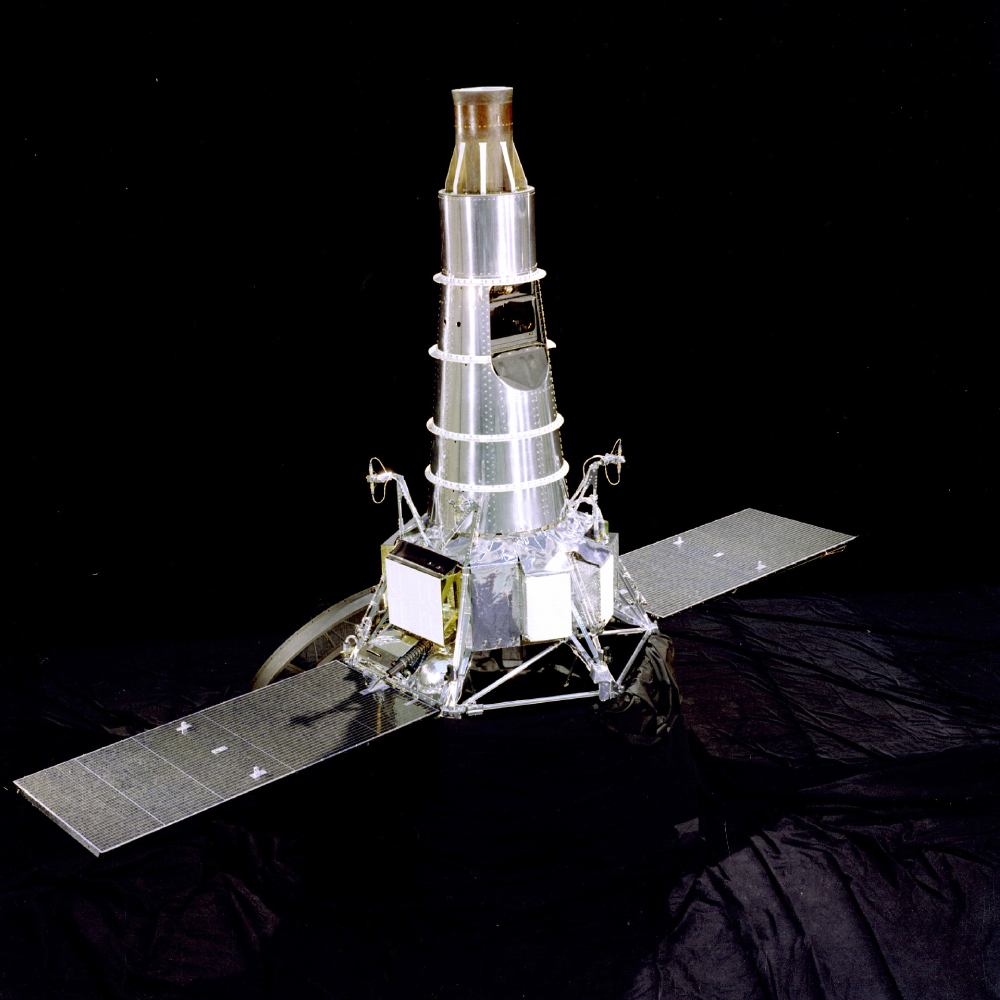
Ranger missions (1-9) were the first U.S. attempt to obtain close-up images of the Moon. Images were taken and transmitted to Earth up to the final moments before impact.
Lunar Orbiter Missions (1966-1967)
The Lunar Orbiter spacecraft (1-5) successfully photographed 99% of the Moon's surface and imaged 20 potential lunar landing sites proposed for the Surveyor and Apollo missions.
Surveyor Missions (1966-1968)
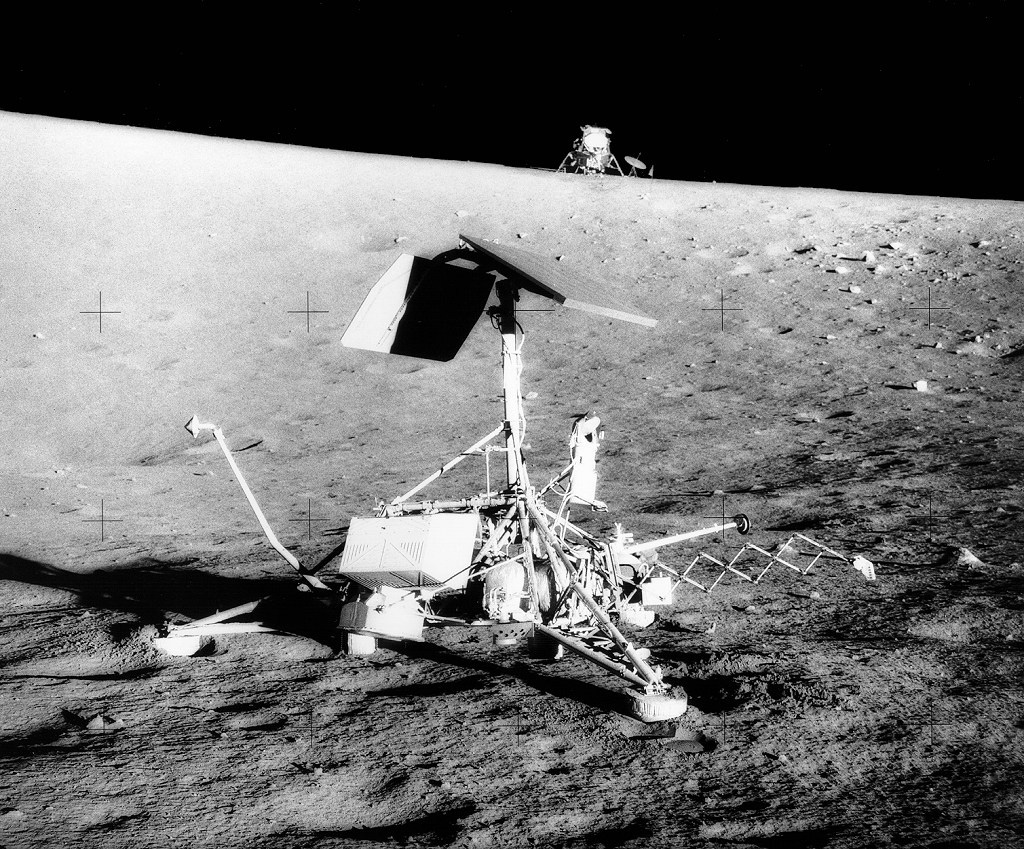
The Surveyor probes (1,3,5-7) were the first U.S. spacecraft to land safely on the Moon. Their objectives were to obtain close-up images of the surface and to determine if the terrain was safe for manned landings.
1958–1966
Putting Americans in Space with Mercury and Gemini
The Mercury and Gemini Missions Put the First Americans in Space and Provided Crucial Experience that Enabled the Lunar Expeditions.
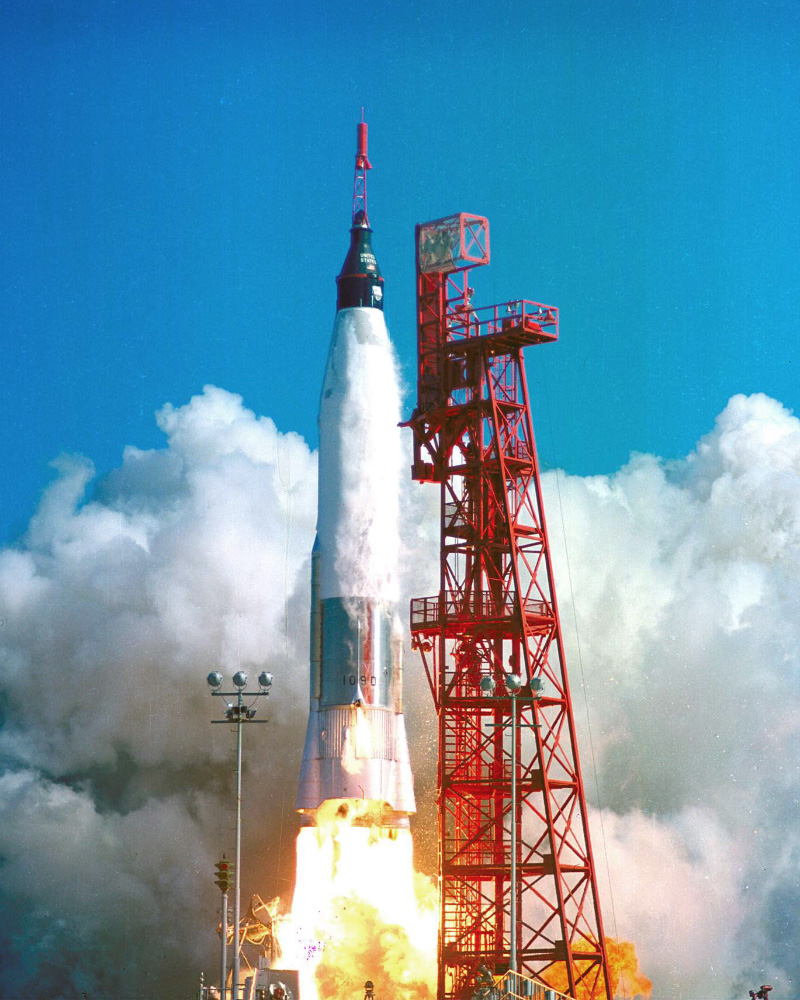
Project Mercury Began in 1958 and completed in 1963, Project Mercury was the first major U.S.program to establish a human presence in space. The objectives of the program, which made six human flights from 1961 to 1963, were:
- To successfully orbit a manned spacecraft around Earth.
- To investigate humankinds' ability to function in space.
- To recover both occupant and spacecraft.
Each Mercury spacecraft carried one astronaut. There were seven Mercury astronauts, all military test pilots. Six of them (Alan Shepard, Gus Grissom, Gordon Cooper, and Wally Schirra) flew aboard the Mercury spacecraft. The seventh, Deke Slayton, was grounded due to a minor medical ailment but eventually flew as a crewman aboard the Apollo-Soyuz Test Project in 1975.
Project Gemini
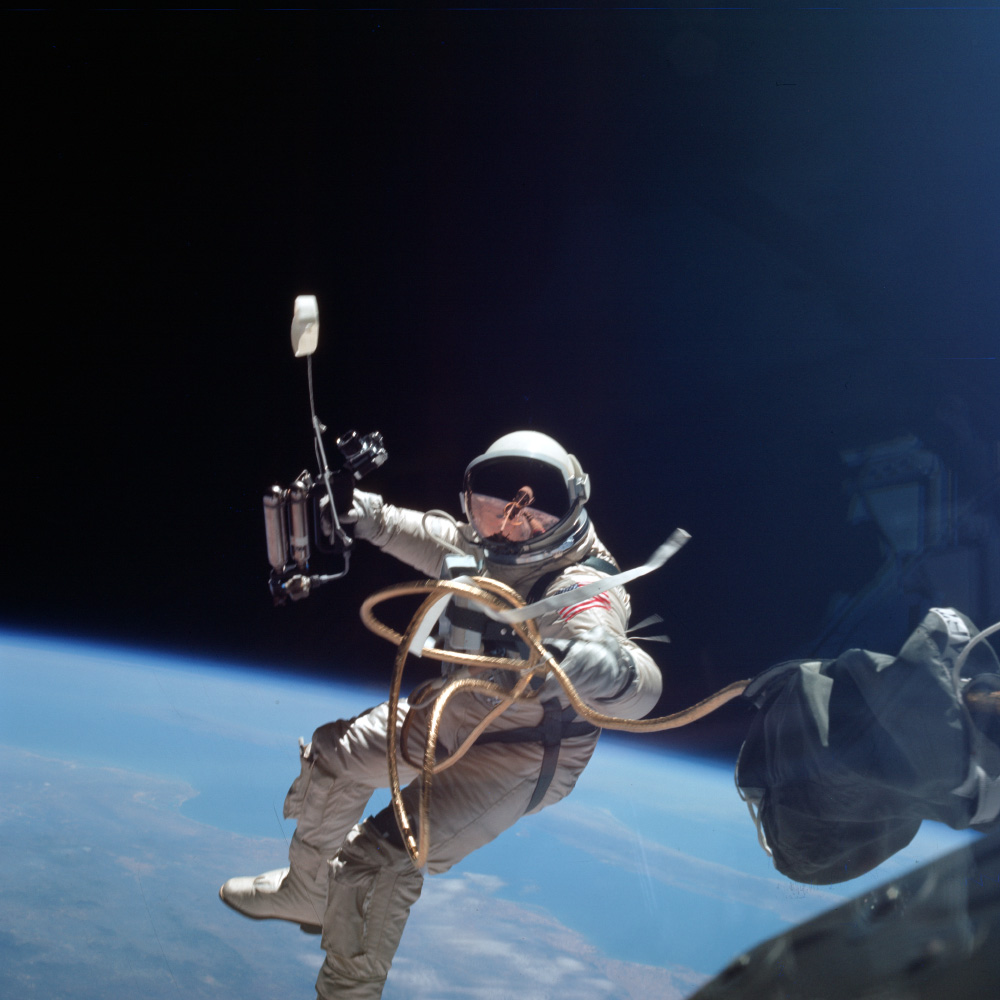
Project Gemini (named for the crew of two astronauts flying aboard each Gemini spacecraft) was the second human spaceflight program initiated by the United States. Operating between Mercury and Apollo, Project Gemini consisted of 10 successful flights in 1965 and 1966. It provided crucial experience by developing and testing the techniques for advanced space travel and long-duration space operations necessary to land humans on the Moon. Gemini missions involved the first American extravehicular activity and new orbital maneuvers including rendezvous and docking.
The objectives of the Gemini program were:
- Gain astronaut experience with long duration space flights.
- Perfect methods of reentry and landing the spacecraft.
- Study the effects of weightlessness on astronauts during long flights.
1967–1972
"I believe that this nation should commit itself to achieving the goal, before this decade is out, of landing a man on the Moon and returning him safely to the Earth. No single space project in this period will be more impressive to mankind, or more important for the long-range exploration of space..."
The Apollo Adventure
The Apollo Program of lunar exploration is considered one of the greatest achievements in human history. Apollo's goals went beyond landing Americans on the Moon and returning them safely to Earth, and included achieving preeminence in space for the United States, establishing the technology to meet other national interests in space, and carrying out a program of scientific exploration of the Moon.
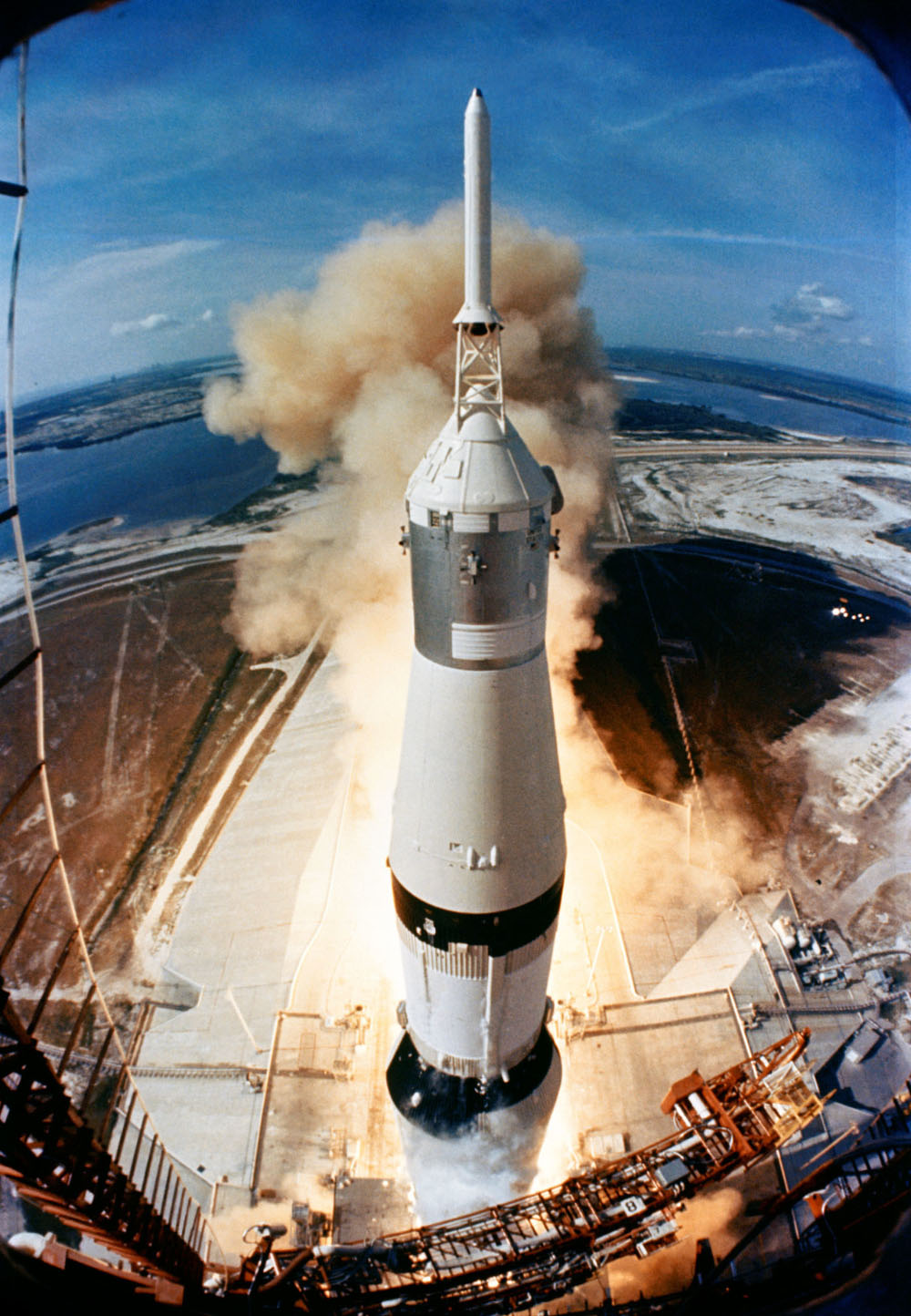
Apollo Missions (1967-1972):
- Apollo 1, Launch pad accident.
- Apollo 7, Test of Apollo spacecraft in Earth orbit.
- Apollo 8, First circumlunar mission; first human voyage beyond low-Earth orbit.
- Apollo 9, Test of lunar module in Earth orbit.
- Apollo 10, Test of lunar module in lunar orbit.
- Apollo 11, First lunar landing. Landing Site: Mare Tranquillitatis.
- Surface Time: 21 h 36 min 20 s
- Apollo 12, Lunar landing at Oceanus Procellarum/Mare Cognitium.
- Surface Time: 31 h 31 min 11.6 s
- Apollo 13, Circumlunar mission. Safe return of spacecraft following in-flight spacecraft anomaly.
- Apollo 14, Lunar landing at Fra Mauro
- Surface time: 33 h 30 min 29 s
- Apollo 15, Lunar landing at Hadley Rille; first mission with lunar rover.
- Surface time: 66 h 54 min 53.9 s
- Apollo 16, Lunar landing in the Descartes Highlands.
- Surface time: 71 h 2 min 13 s
- Apollo 17, Lunar landing in the Taurus-Littrow Valley, last human lunar landing to date.
- Surface time: 74 h 59 min 40 s
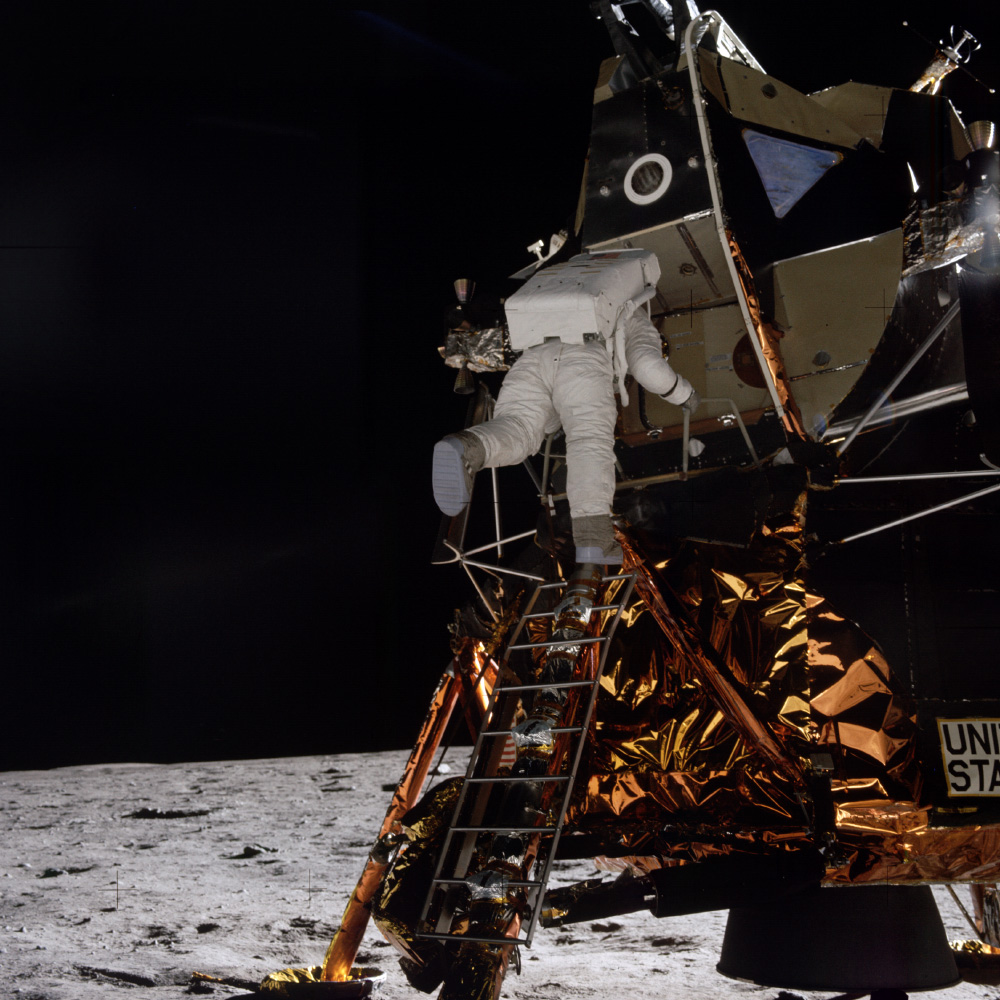
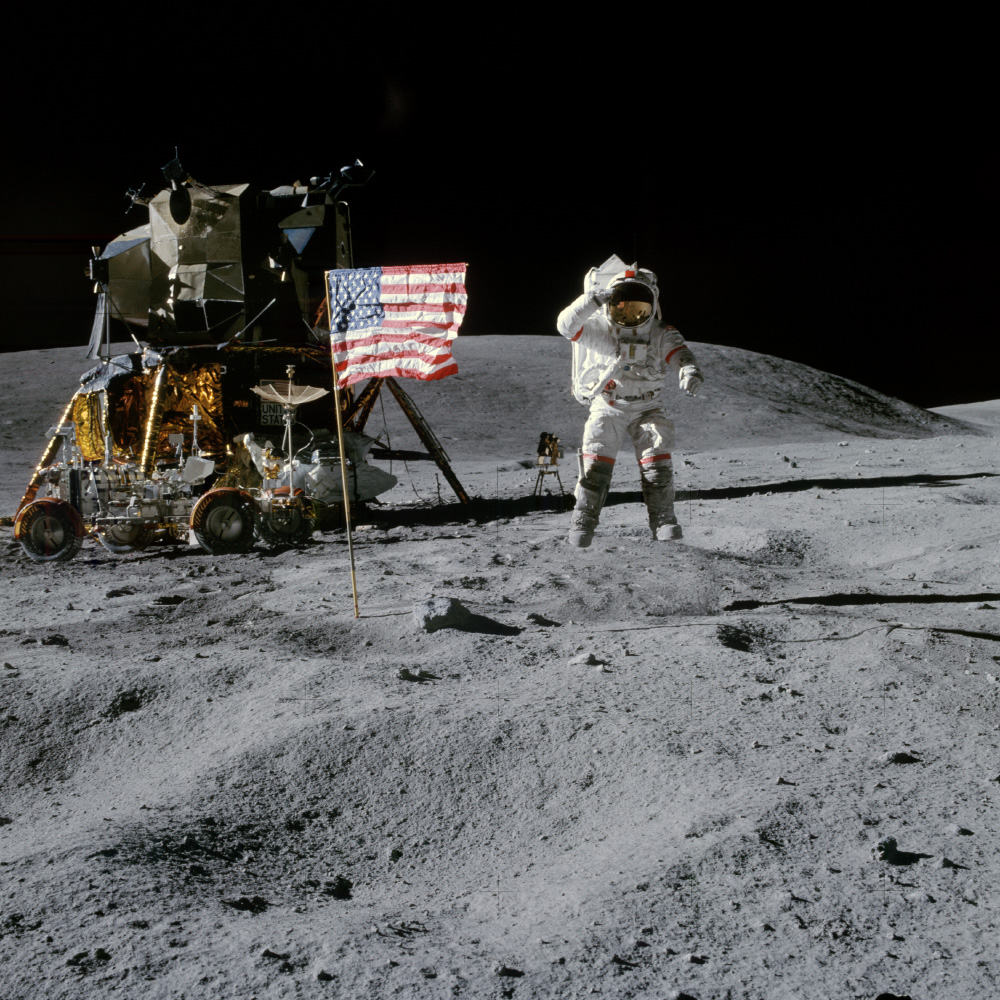
Rocks from the Moon
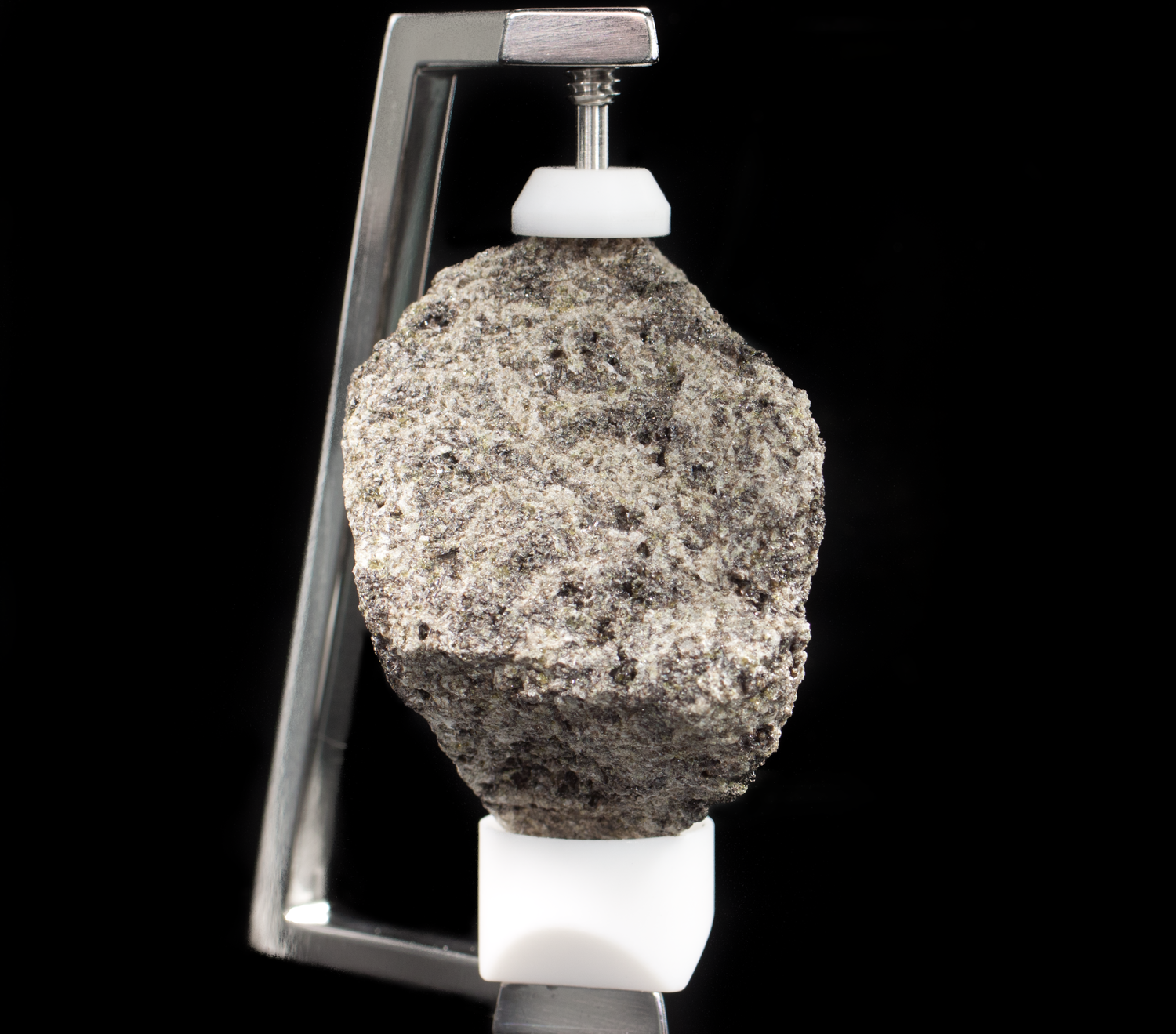
A total of 382 kg of lunar rocks were returned from the Moon by the Apollo lunar surface exploration missions. The fieldwork and sampling performed by the Apollo astronauts fundamentally revolutionized our understanding of the Solar System. For example, before the Apollo missions, it was thought that the Moon was an undifferentiated primordial body left over from the formation of the Solar System, but analysis of the lunar samples revealed that the Moon is an evolved planet, with internal zoning similar to that of the Earth.
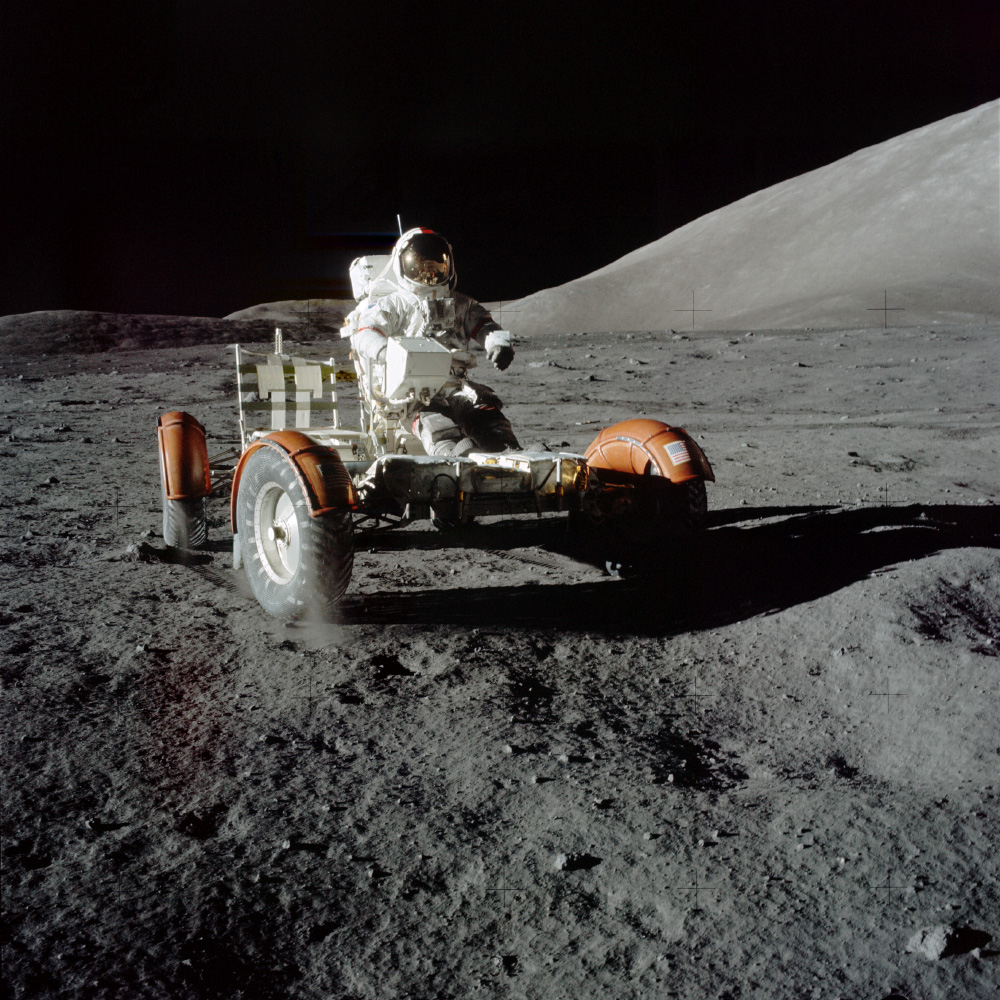
Naming lunar landmarks
During their original explorations of the Moon, U.S. Astronauts gave informal names to lunar landmarks as navigational aids while they maneuvered the first human explorations of the lunar frontier. Visual navigation was a critical check for the Apollo astronauts as they descended upon the lunar surface, and these landmarks played a key role in the success of their missions. Many of the Apollo-era landmarks appear in radio transmissions, transcripts, historical records, technical reports, pre and post-mission documentation, and maps, but a majority of the names are not officially recognized by the International Astronomical Union.
In order to further aid researchers and historians, these informal names have been merged with the official IAU nomenclature and are included in Lunaserv Global Explorer, Quickmap, and the merged shapefile is available for download here.
1994–1999
Clementine: a New Beginning
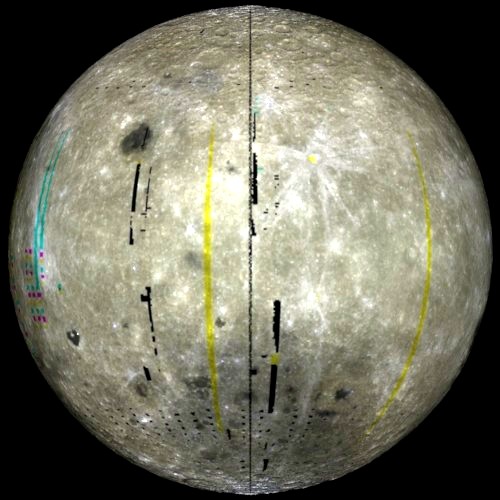
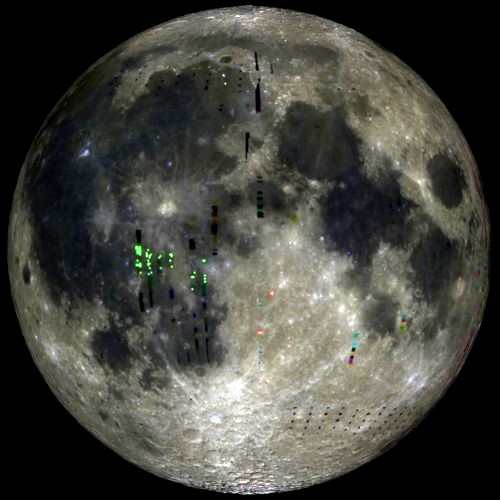
The Clementine spacecraft orbited the Moon and collected science data for 10 weeks in the Spring of 1994. During this time, it collected global multispectral images and near-global altimetry. Select areas of the Moon were imaged at 25 m/pixel in visible light and 60 m/pixel in thermal wavelengths. From these data, a new paradigm for the evolution of the lunar crust emerged. the Moon is no longer viewed as a two-terrane planet, the Apollo samples were found not to represent the lunar crust as a whole, and the complexity of lunar crustal stratigraphy was further revealed.
Lunar Prospector
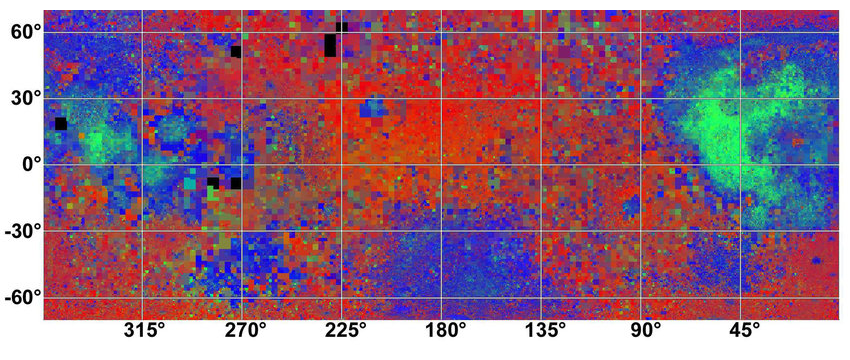
NASA's Lunar Prospector Mission orbited the Moon from 1998-1999 and provided important new insights into the origin and evolution of the lunar crust. It carried no cameras, but rather an array of instruments to produce the first global maps of the Moon's gravity, magnetic field, and surface composition. Two instruments in particular produced vital results: the Neutron Spectrometer, which was designed to detect the water hypothesized to exist in some places on the Moon's surface , and the Gamma-Ray Spectrometer (LP-GRS), which directly measured the global distribution of key elements such as iron, potassium, and thorium on the Moon's surface for the first time. The LP-GRS was particularly sensitive to thorium, which is naturally radioactive. This gave lunar scientists their first look at the global distribution of an important thorium-rich lunar material known as KREEP (for Potassium, Rare Earth Elements, and Phosphorous).
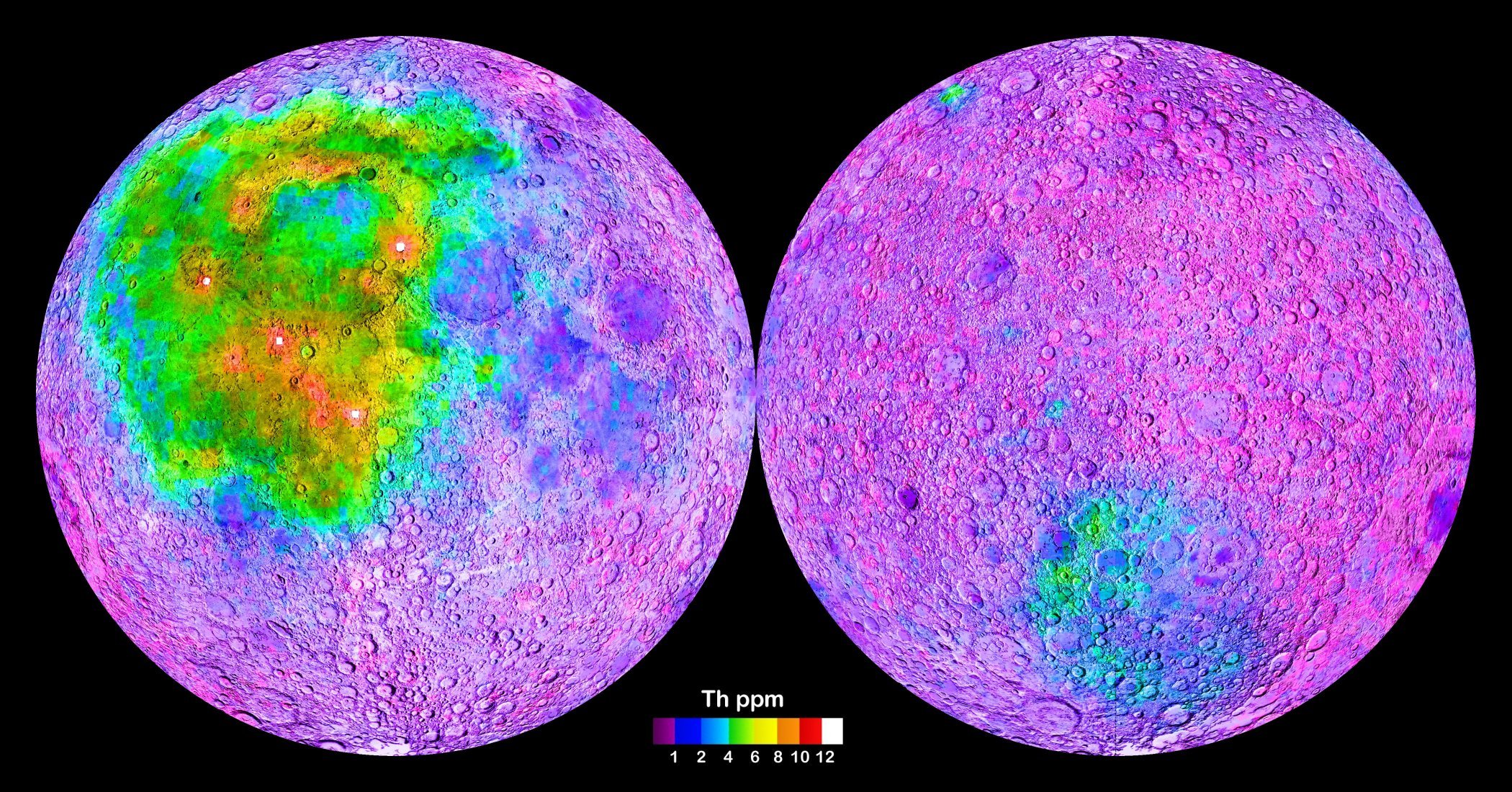
Before the Lunar Prospector mission, it was assumed that KREEP materials were a component in a nearly global layer beneath the lunar crust, but the Lunar Prospector results showed that the KREEP materials were concentrated on the lunar nearside, a fact which could be related to the distribution and longevity of lunar mare volcanism.
Lunar Polar Ice?
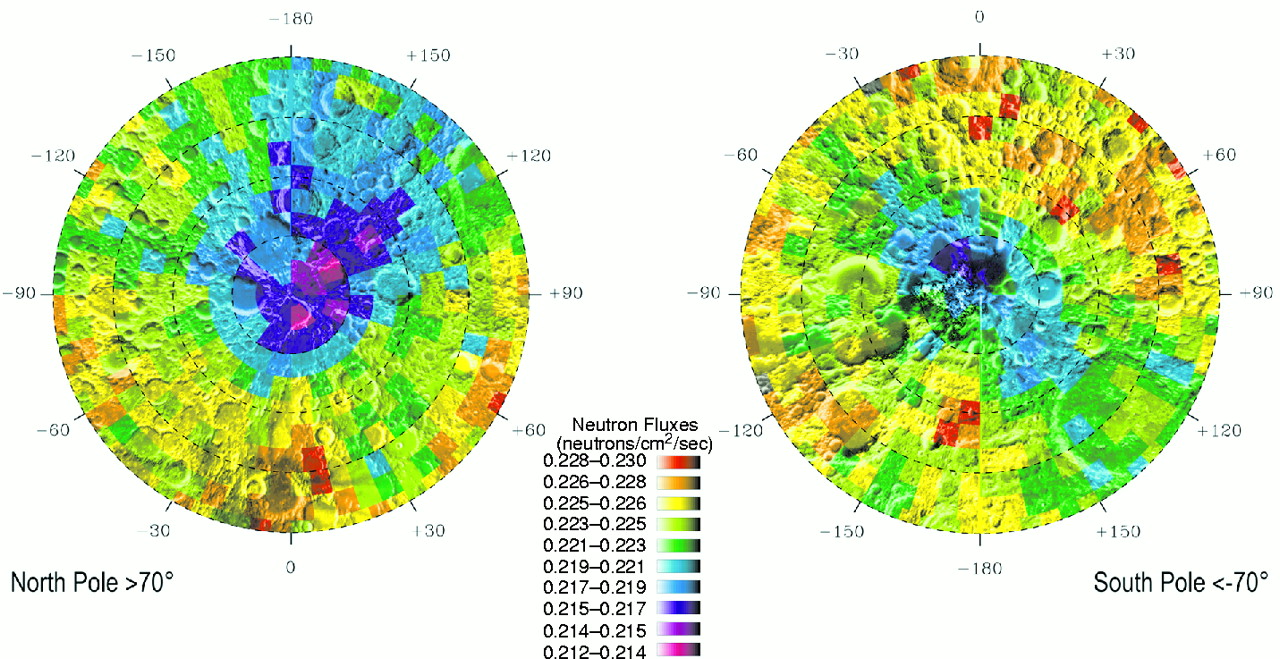
Although the Moon rocks brought back to Earth by the Apollo astronauts contain no water or hydrous minerals, there are permanently shadowed regions near the north and south poles where sunlight never penetrates. These shadowed regions act as cold traps for volatiles deposited by cometary impacts. Lunar Prospector's Neutron Spectrometer instrument detected high levels of hydrogen (presumably, the H in H2O) at both lunar poles. This has been interpreted to reflect the possible presence of water ice in these craters. Water can be used for life support, agriculture, and propellant, so ice would be a vital resource for future lunar settlers. Understanding how much water exists at the lunar poles remains an important goal of the Lunar Reconnaissance Orbiter (LRO) mission and future lunar exploration.
2009–Beyond
The Next Astronauts Who Visit the Moon Will Know Where to Land, Thanks to LRO
ASU is playing a key role in the Lunar Reconnaissance Orbiter mission. Mark Robinson, professor of geological sciences at ASUs School of Earth and Space Exploration, is the principal investigator for the imaging system on board LRO, a suite of three cameras known as the Lunar Reconnaissance Orbiter Camera (LROC).
LRO Mission Overview
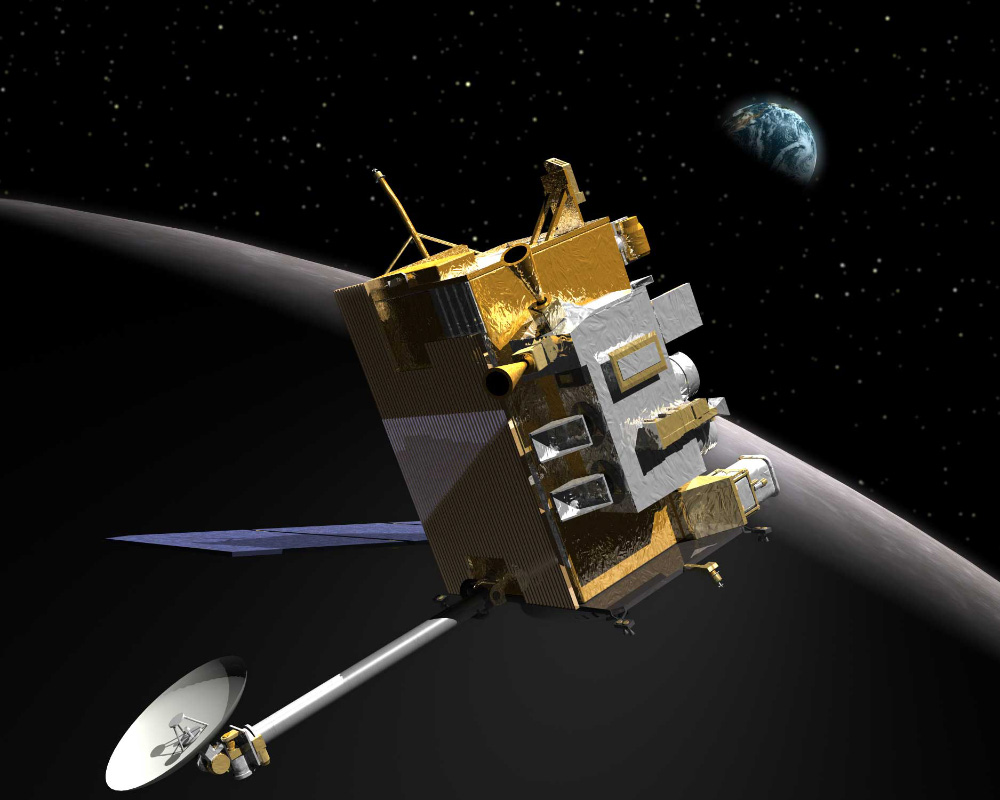
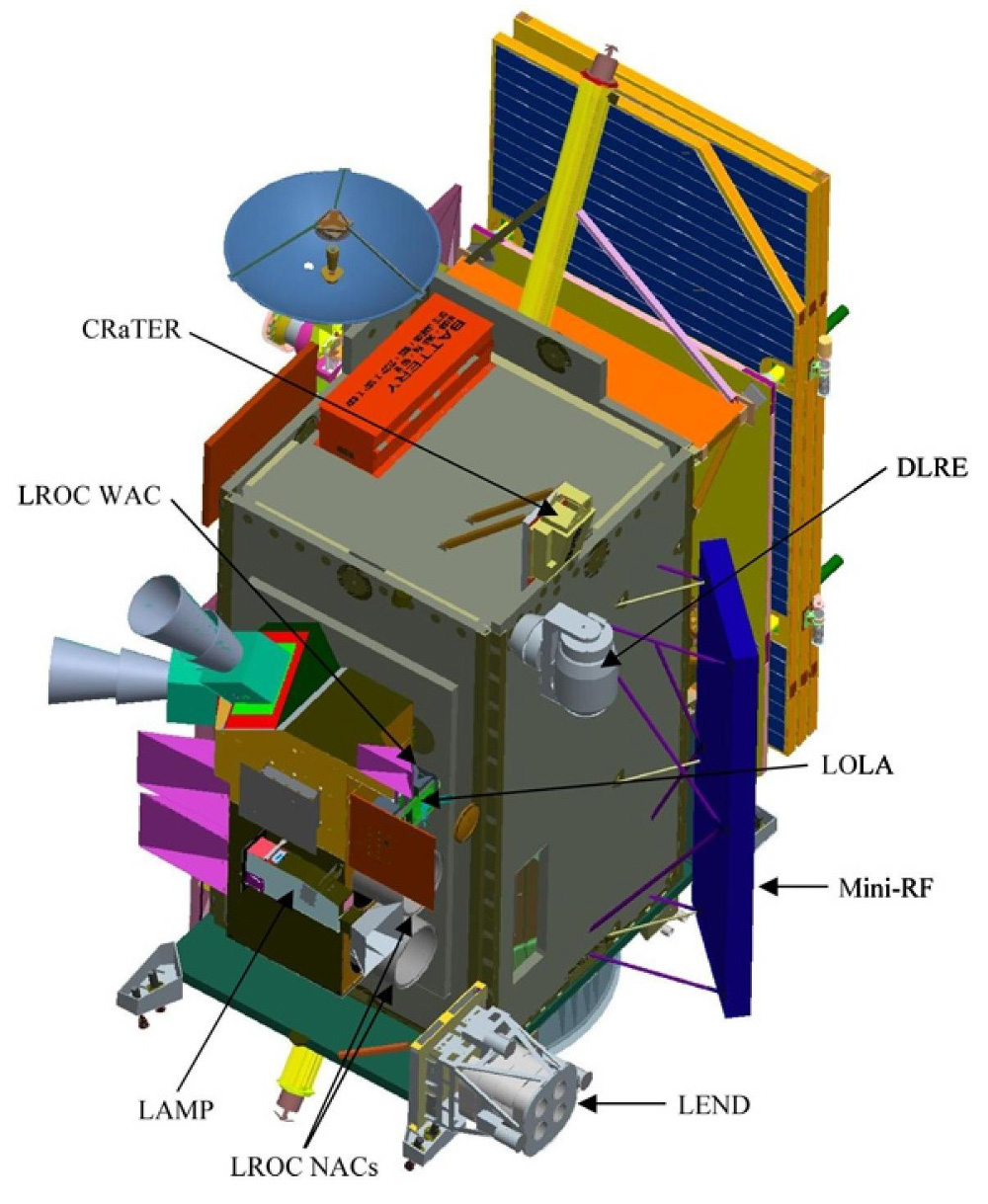
The Lunar Reconnaissance Orbiter (LRO) mission launched in June 2009. The orbiter is equipped with seven instruments: Lunar Reconnaissance Orbiter Camera (LROC), Lunar Orbiter Laser Altimeter (LOLA), Lunar Exploration Neutron Detector (LEND), Diviner Lunar Radiometer Experiment, Lyman-Alpha Mapping Project (LAMP), and the Cosmic Ray Telescope for the Effects of Radiation (CRaTER), and the Miniature Radio Frequency instrument (Mini-RF). The measurements from LRO are fundamentally redefining our understanding of the Moon and inner Solar System. For more information on LRO visit the NASA Goddard Space Flight Center.
New Apollo Digital Archive at ASU
For nearly 40 years, the complete photographic record from the Apollo project sat in a freezer at NASA's Johnson Space Center in Houston, almost untouched, until now. A new digital archive created through a collaboration between Arizona State University and Johnson Space Center is making available on the Internet breathtaking high-resolution scans of original Apollo flight films.
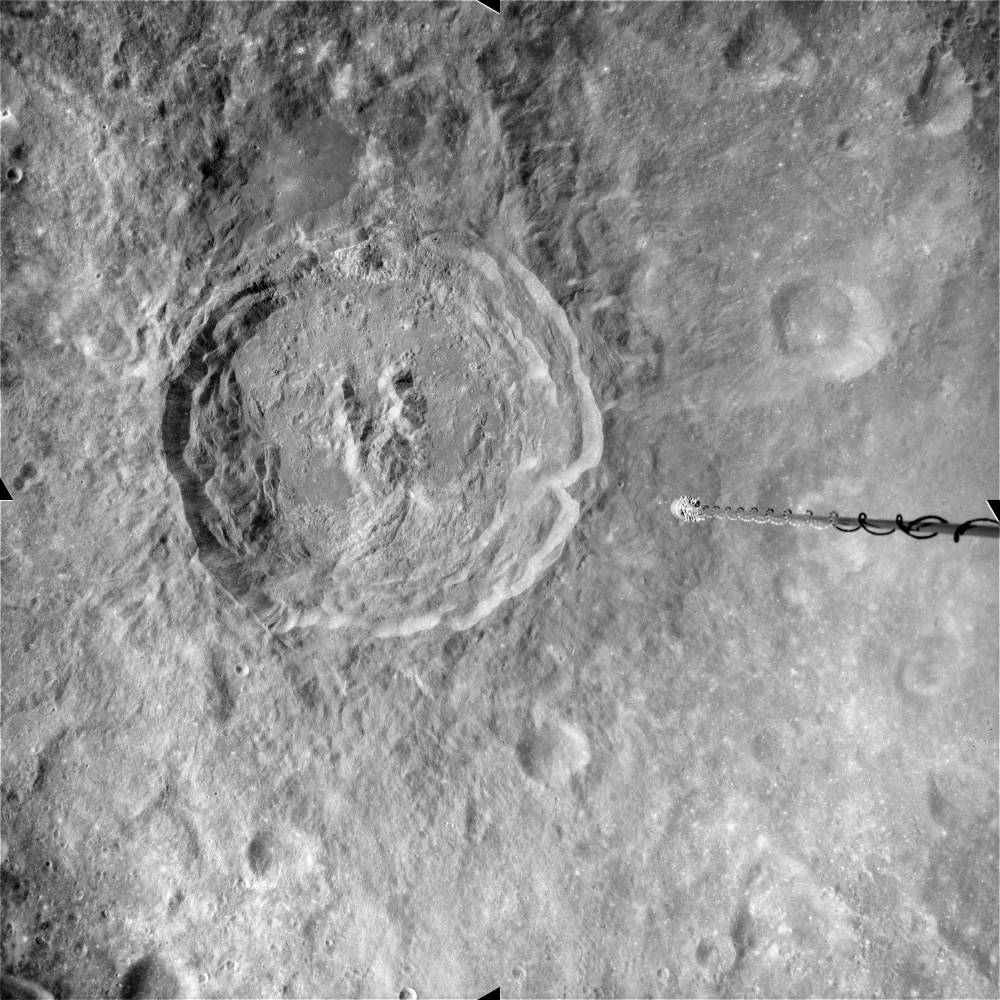
Most images acquired by astronauts during the Apollo missions have never been seen in high resolution detail by the public, or even by most scientists. Previous scanning projects have not used the original flight films that came back from the Moon. These startling images are accessible to both researchers and the general public, to browse or download, at: the Apollo Image Archive and the March to the Moon gallery.